
Difference between ADHD and autism in children | WhyTheyThink Blog
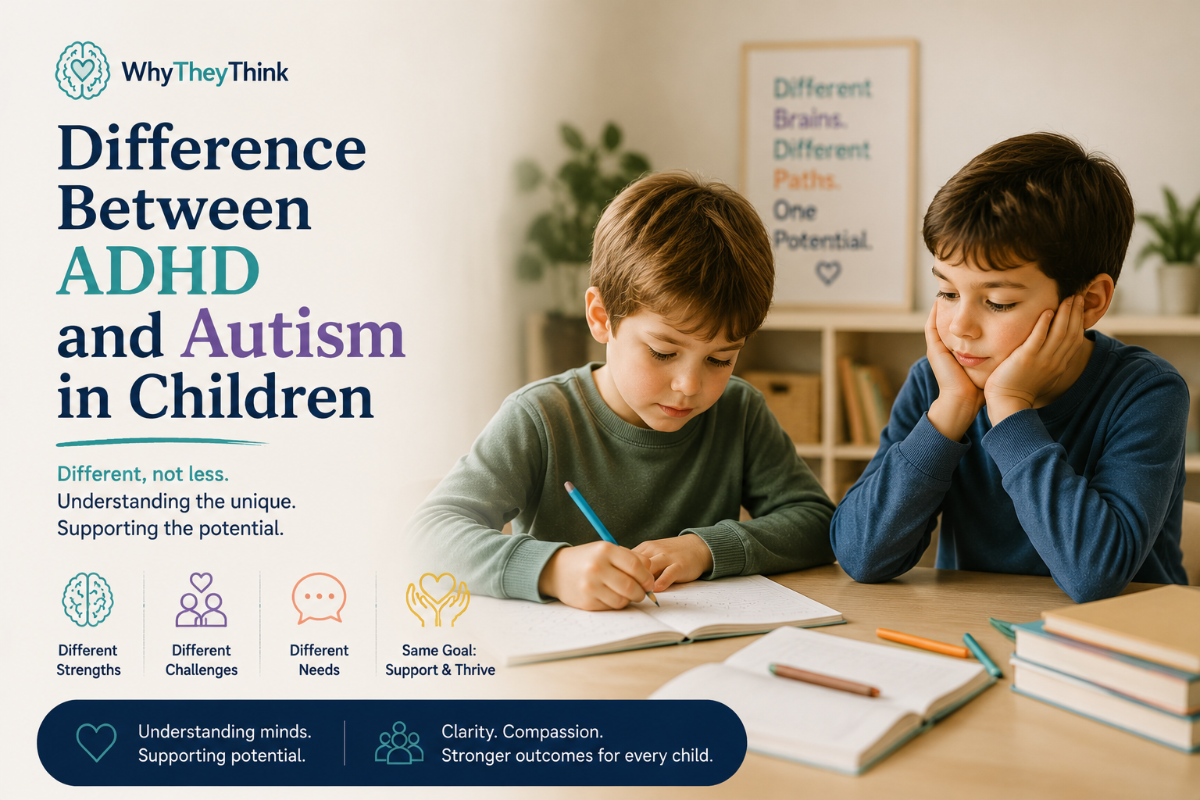
ADHD and autism can look similar in a classroom: distractibility, social friction, and intense interests. Understanding the difference starts with seeing the full pattern, not one behavior in isolation.
ADHD patterns often involve
- Difficulty sustaining attention on non-preferred tasks
- Impulsivity and restlessness
- Inconsistent performance day to day
Autism patterns often involve
- Difficulty with social reciprocity and unspoken rules
- Strong need for predictability and routine
- Deep, sustained focus on specific interests
Overlap is common
Many children show traits of both. That is why WhyTheyThink screens 16 conditions in one questionnaire rather than forcing a single-label quiz.
What to do next
Observe patterns across settings: home, school, and community. Share concerns with your pediatrician or school team. A broad screening can give you language for those conversations.
Start a free screening in parent mode.
Related articles
- Twice-Exceptional (2e): What It Means to Be Gifted and Neurodivergent | WhyTheyThink Blog
Twice-exceptional (2e) individuals are both gifted and neurodivergent, often excelling in some areas while facing learning challenges. Learn what 2e means, signs to look for, and how to support them effectively.
- Why Does My Child Overreact to Clothing Tags? | WhyTheyThink Blog
Some children melt down over scratchy tags, tight socks, or noisy rooms and it's not defiance. Here's what sensory overreaction actually looks like and what might be behind it.
- How to talk to your child's teacher about ADHD | WhyTheyThink Blog
Talking to your child's teacher about ADHD concerns doesn't have to be uncomfortable. Here's how to prepare, what to say, and how to keep the conversation productive.