
Twice-Exceptional (2e): What It Means to Be Gifted and Neurodivergent | WhyTheyThink Blog
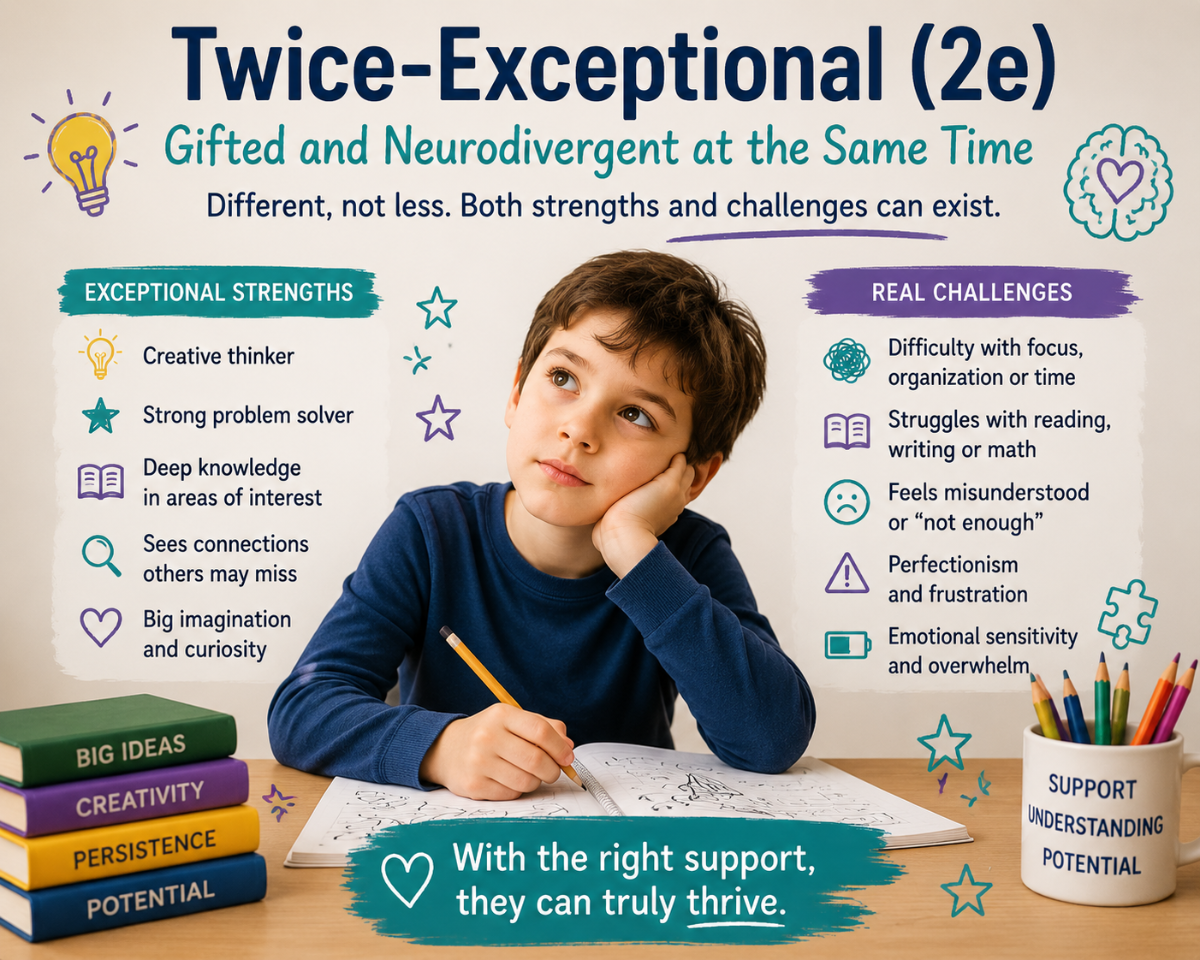
Twice-Exceptional (2e): Gifted and Neurodivergent at the Same Time
Twice-exceptional individuals, often referred to as 2e, are people who are both gifted in one or more areas and neurodivergent at the same time. This means they may show advanced abilities in certain subjects such as problem-solving, creativity, memory, or reasoning, while also experiencing significant learning, developmental, or attention-related challenges.
Understanding 2e individuals is important because their strengths and difficulties can mask each other. In some cases, their challenges can hide their talents, leading them to be misunderstood or under-supported. In other cases, their strengths can mask their difficulties, making it harder for parents, teachers, or professionals to recognize that additional support is needed.
Learn more about twice-exceptional individuals here
What Does Twice-Exceptional Mean?
A twice-exceptional person has two key traits happening at the same time:
- High ability or giftedness in one or more areas
- A neurodevelopmental difference or learning challenge
Common neurodivergent profiles in 2e individuals may include:
- ADHD
- Autism spectrum differences
- Dyslexia
- Dyscalculia
- Dysgraphia
- Auditory processing challenges
This combination creates a very uneven learning profile. A child might excel in science or storytelling but struggle significantly with reading, handwriting, organization, or attention.
Why 2e Individuals Are Often Misunderstood
One of the biggest challenges for twice-exceptional individuals is that their abilities and struggles can cancel each other out in traditional environments.
For example:
- A highly intelligent child may be labeled as “lazy” because they avoid tasks that are difficult for them
- A child with strong verbal reasoning may struggle in written assignments and appear inconsistent
- A student with advanced creativity may have difficulty with structured learning environments
Because of this imbalance, 2e individuals are often overlooked in both gifted programs and special education systems.
Common Signs of Twice-Exceptionality
While every individual is different, some common patterns include:
- Strong curiosity and deep knowledge in specific interests
- Uneven academic performance across subjects
- High creativity and original thinking
- Difficulty with organization, time management, or focus
- Frustration when performance does not match ability
- Sensory sensitivities or emotional intensity
- Avoidance of tasks that require sustained effort in weaker areas
Strengths of 2e Individuals
Twice-exceptional individuals often have remarkable strengths, including:
- Innovative thinking and problem-solving
- Strong memory in areas of interest
- High creativity and imagination
- Ability to think in non-linear or unique ways
- Deep focus on preferred topics
When properly supported, these strengths can become powerful advantages in education, work, and life.
Challenges They May Face
Despite their strengths, 2e individuals can experience:
- Low self-esteem due to inconsistent performance
- Anxiety or frustration in traditional systems
- Misdiagnosis or missed diagnosis
- Difficulty accessing appropriate learning support
- Social or emotional challenges related to feeling misunderstood
How to Support Twice-Exceptional Individuals
Support works best when both sides of the profile are considered:
- Encourage strengths and interests without limitation
- Provide accommodations for learning challenges
- Avoid labeling based on performance alone
- Use flexible teaching and evaluation methods
- Support emotional regulation and self-understanding
- Focus on growth rather than comparison
Most importantly, 2e individuals benefit from environments that recognize both their intelligence and their challenges at the same time.
Final Thought
Twice-exceptional individuals are not defined by either their strengths or their struggles alone. They are a combination of both. With the right understanding and support, they can thrive in ways that traditional systems often fail to recognize.
Helping them succeed starts with one simple shift: seeing the whole person.
Related articles
- Why Does My Child Overreact to Clothing Tags? | WhyTheyThink Blog
Some children melt down over scratchy tags, tight socks, or noisy rooms and it's not defiance. Here's what sensory overreaction actually looks like and what might be behind it.
- How to talk to your child's teacher about ADHD | WhyTheyThink Blog
Talking to your child's teacher about ADHD concerns doesn't have to be uncomfortable. Here's how to prepare, what to say, and how to keep the conversation productive.
- Is It ADHD or Just Being 4? How to Tell the Difference | WhyTheyThink Blog
Most 4-year-olds are a whirlwind of energy and short attention spans. Here's how to spot the difference between typical preschool behaviour and signs that might point to ADHD.